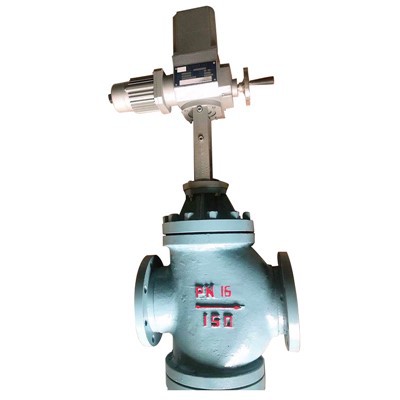


Electric Control Valve

Structural features of electric control valve
1. The servo amplifier adopts deep dynamic negative feedback, which can improve the accuracy of automatic adjustment.
2. Electric operators come in various forms and are suitable for 4~20mA. DC or 0~10mA.DC.
3. The adjustable range is large, the inherent adjustable ratio is 50, and the flow characteristics include straight line and equal percentage.
4. The electronic electric control valve can directly control the valve opening by current signals without the need for a servo amplifier.
5. The valve body is designed according to the principle of fluid mechanics with a low-flow resistance passage of equal cross-section, and the rated flow coefficient is increased by 30%.
product details
Complete range
With a complete range of product specifications, you can always find the one that suits you

Strong and sturdy
Good product quality, strong antioxidant properties and durability

Meticulous workmanship
Smooth workmanship and fine surface grinding without burrs

Regulating valve, also known as control valve, is a device that uses power operation to change fluid flow in a process system. The International Electrotechnical Commission (IEC) defines the regulating valve [called Control Valve abroad] as: "It includes a net component, an internal valve body component that changes the flow rate of the process fluid, and one or more actuators. connected.
The actuator is used to respond to the signal sent by the control component. The regulating valve is composed of an actuator and a valve component. The actuator is the driving device of the regulating valve. It generates corresponding thrust according to the signal pressure, causing the push rod to move periodically, thereby driving the valve core of the regulating valve to move. The valve component is the regulating part of the regulating valve. It directly interacts with the medium through the displacement of the actuator push rod to change the throttling area of the regulating valve to achieve the purpose of regulation. Regulating valves are mainly divided into pneumatic regulating valves, electric regulating valves and hydraulic regulating valves according to their energy sources. The difference lies in the actuator they are equipped with. The pneumatic control valve uses compressed air as the power source and is equipped with a pneumatic actuator. The electric control valve uses electricity as the power source and is equipped with an electric actuator; the hydraulic control valve uses hydraulic pressure as the power source and is equipped with a hydraulic actuator.
According to needs, the regulating valve can be equipped with a variety of accessories to make it more convenient to use and more complete in function. These accessories include valve positioners, handwheel mechanisms, electrical converters, etc.
Valve body form


Valve Bonnet form


Working principle of electric control valve
The electric regulating valve automatically controls the opening of the valve according to the signal from the regulating part, thereby regulating the medium flow, pressure and liquid level. Taking the most commonly used 4-20mA current signal as an example, when the signal from the control system to the electric control valve is 4mA, the control valve is in a fully closed state, and when a 20mA signal is given to it, the control valve is in a fully open state. Different signal values between 4-20mA correspond to different openings of the regulating valve, that is, when the control system gives it a 12mA signal, the opening of the regulating valve is 50%. Select the applicable flow coefficient according to your own working condition medium, and you can calculate the flow rate and pressure corresponding to each opening of the regulating valve. In order to achieve the regulation requirements of the regulating valve for the working medium.
Hot Tags: motorized electric water flow regulator control valve, China, manufacturers, suppliers, factory, buy, price, quotation, Automatic Gate Valve, Control Valve Actuator, Air Damper Valve, Electric Butterfly Valve, Motorized Butterfly Valve, Motorized Control Butterfly Valve