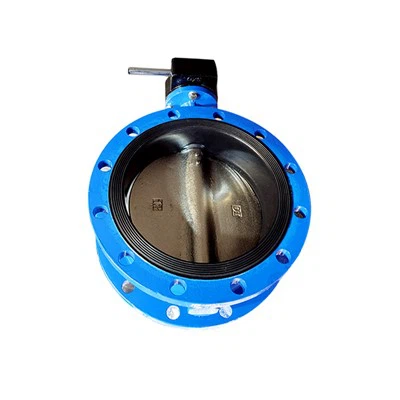


EPDM Butterfly Valve

Special high temperature paint layer
The paint surface adheres closely to protect the valve body from rusting under various working conditions.

Light torque and good sealing performance
Soft back design, light torque, good sealing performance, tight integration of valve body and valve seat, unchanged clamping type, easy maintenance

Installation and maintenance of butterfly valves

1. During installation, the valve disc should stop in the closed position.
2. The opening position should be determined according to the rotation angle of the butterfly plate.
3. For butterfly valves with a bypass valve, the bypass valve should be opened before opening.
4. Installation should be carried out according to the manufacturer's installation instructions. Butterfly valves with heavy weight should be installed on a solid foundation.
product details
Flat bottom valve seat
The flat-bottom valve seat prevents dirt accumulation and makes the seal more reliable. It is small in size and light in weight, making it easy to install and maintain.

Corrosion-resistant stainless steel
The internal parts of the valve are made of corrosion-resistant stainless steel and copper alloy materials, which can be used in sewage systems and suitable for harsh working environments.

O-ring seal
The valve stem is sealed with three O-rings, which greatly reduces the friction resistance during switching. The switch is light and does not leak.

Installation steps of wafer butterfly valve
The wafer butterfly valve is one of the most common types of valves in industrial pipelines. The wafer butterfly valve itself has a relatively small structure. You only need to place the butterfly valve between the flanges at both ends of the pipe, and use stud bolts to pass through the pipe flange and the opposite end of the pipe. The clamp butterfly valve is locked to control the fluid medium in the pipeline. Wafer butterfly valve is particularly suitable for places with narrow space or short distance between pipelines. When the butterfly valve is in the fully open position, the thickness of the butterfly plate is the only resistance when the medium flows through the valve body, so the pressure drop generated by the valve is very small. Small, so it has better flow control characteristics.

1. As shown, place the valve between the two pre-installed flanges, making sure the bolt holes are neatly aligned.
2. Gently insert the four pairs of bolts and nuts into the flange holes, and tighten the nuts slightly to correct the flatness of the flange surface.
3. Fix the flange on the pipe using electric welding

4. Remove the valve
5. Completely weld the flange to the pipe
6. Wait for the welding joint to cool before installing the valve. Ensure that the valve has enough movement space in the flange to prevent the valve from being damaged

7. Correct the valve position and tighten the four pairs of bolts (be careful not to overtighten)
8. Open the valve, ensure that the valve plate can open and close freely, and then open the valve plate slightly.
9. Tighten all nuts in a cross-balanced manner
10. Confirm again that the valve can open and close freely. Note: Make sure the valve plate does not touch the pipe.
Before installing the wafer butterfly valve, it must be laid flat first. Remember not to bump it at will. After pulling it to the installation length during installation, it is not allowed to design the on-site pipeline without special permission. Disassemble the wafer butterfly valve at will, this is what we need to know before installation. At the same time, everyone also needs to know that the wafer butterfly valve can be installed in any position, but after the wafer butterfly valve is installed, it is necessary to lay the butterfly valve along the line and make a bracket for the wafer butterfly valve. Once the bracket is made, it is used It is strictly prohibited to remove the bracket during this time.
Hot Tags: dn200 wafer type ptfe lined butterfly valve, China, manufacturers, suppliers, factory, buy, price, quotation