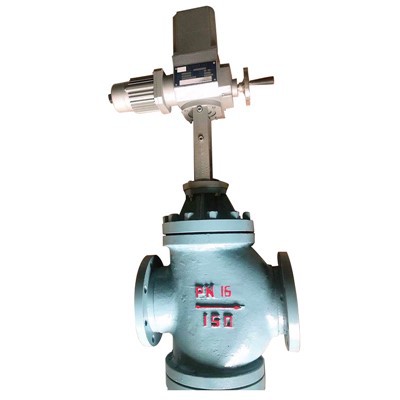


PNEUMATIC GATE VALVE

OVERVIEW
A pneumatic gate valve is a valve driven by compressed air, which is used to control and switch fluids.
The working principle of a pneumatic gate valve is that the piston in the cylinder generates thrust under the pressure of the air source, so that the transmission rod drives the valve core upward or downward to achieve the opening and closing of the valve. Some pneumatic gate valves also have a manual mechanism so that they can be switched to manual operation when the pneumatic part is out of control.
Pneumatic gate valves are usually composed of valve body, valve stem, valve core, transmission mechanism, pneumatic actuator and other parts. Among them, the valve body is the main part of the valve, which is used to accommodate the valve core and the medium; the valve stem is used to connect the valve core and the transmission mechanism to achieve the lifting and lowering movement of the valve core; the transmission mechanism is used to transfer the thrust of the pneumatic actuator to the valve stem; the pneumatic actuator is the power source of the valve, which drives the valve to open and close through compressed air.
Pneumatic gate valves are widely used in many fields such as petroleum, chemical industry, electric power, environmental protection, water conservancy, heating, water supply and drainage, industry, machinery, etc., and are suitable for a variety of media such as water, oil, and steam.
TECHNICAL PARAMETERS

Product name: Pneumatic gate valve
Gate valve components: body, stem, core
Diameter: DN50-DN1000
Pressure: PN16-PN160
Pneumatic head: single-acting, double-acting
FEATURES
The main features of pneumatic gate valves include quarter-turn structure, good sealing, large adjustment ratio and compressed air as the power source.
Pneumatic gate valves adopt a quarter-turn structure. This design allows the valve to have a smaller operating torque when opening and closing, which is easy to operate and control.
Pneumatic gate valves have good sealing. Whether it is forced sealing or self-sealing, it can ensure that the valve effectively prevents medium leakage when closed. Forced sealing presses the gate against the valve seat through external force, while self-sealing relies on the medium pressure to press the sealing surface of the gate against the valve seat, thereby ensuring the sealing of the sealing surface.

COMPONENTS
Pneumatic gate valves are mainly composed of valve body, valve stem, valve core (gate), transmission mechanism, pneumatic actuator and other parts.
Valve body: The valve body is the main part of the pneumatic gate valve, which is used to accommodate the valve core and medium. It is usually made by casting or forging process, and the materials include ductile iron, cast steel or stainless steel, etc. to adapt to different media and working conditions.
Valve stem: The valve stem is used to connect the valve core and the transmission mechanism to realize the lifting and lowering movement of the valve core. The design of the valve stem needs to consider strength and corrosion resistance to ensure the reliable operation of the valve.
Valve core (gate): The valve core (gate) is a key component of the pneumatic gate valve, which is opened and closed by the control of the pneumatic actuator. The sealing surface between the gate and the valve seat usually adopts a metal seal or a soft seal structure to ensure the sealing performance of the valve. The gate can be a flat plate or disc structure, or a wedge structure to meet different sealing requirements.
Transmission mechanism: The transmission mechanism is used to transmit the thrust of the pneumatic actuator to the valve stem, thereby controlling the opening and closing of the valve core. The design of the transmission mechanism needs to consider transmission efficiency and reliability.
Pneumatic actuator: The pneumatic actuator is the power source of the pneumatic gate valve, which drives the valve to open and close through compressed air. It is usually composed of a cylinder, a piston and a pneumatic valve, and can be selected as a single-acting or double-acting structure as needed. The single-acting pneumatic actuator has a spring that pushes the piston structure, while the double-acting pneumatic actuator needs to be equipped with a two-position five-way solenoid valve to control the in and out of the airflow.
In summary, the components of the pneumatic gate valve work together to realize the opening and closing of the valve and the flow control function.
APPLICATIONS
Pneumatic gate valves are suitable for many industrial fields such as natural gas, petroleum, chemical industry, environmental protection, urban pipelines, gas pipelines, electricity, metallurgy, pharmaceuticals, food, beverages, papermaking, etc. Specifically, in long-distance pipelines for natural gas extraction and purification, and oil and gas pipelines in the petrochemical industry, pneumatic gate valves can be used to control the flow of media to ensure the safety and stability of the production process. In the power industry, pneumatic gate valves can be used for valve control in hydroelectric power stations to achieve precise regulation of water flow, and at the same time control the process of water intake and drainage of boilers in thermal power plants. In the metallurgical industry, pneumatic gate valves can be used to control the flow of media in blast furnaces, converters and other equipment to ensure the smooth progress of the smelting process. In addition, in the pharmaceutical and food industries, pneumatic gate valves can be used to control the flow of raw materials and products to ensure the hygiene and safety of the production process. In the papermaking industry, pneumatic gate valves can also be used to control the flow of media such as pulp and water to ensure the stable operation of the production line.

Hot Tags: pneumatic slurry knife gate valve, China, manufacturers, suppliers, factory, buy, price, quotation