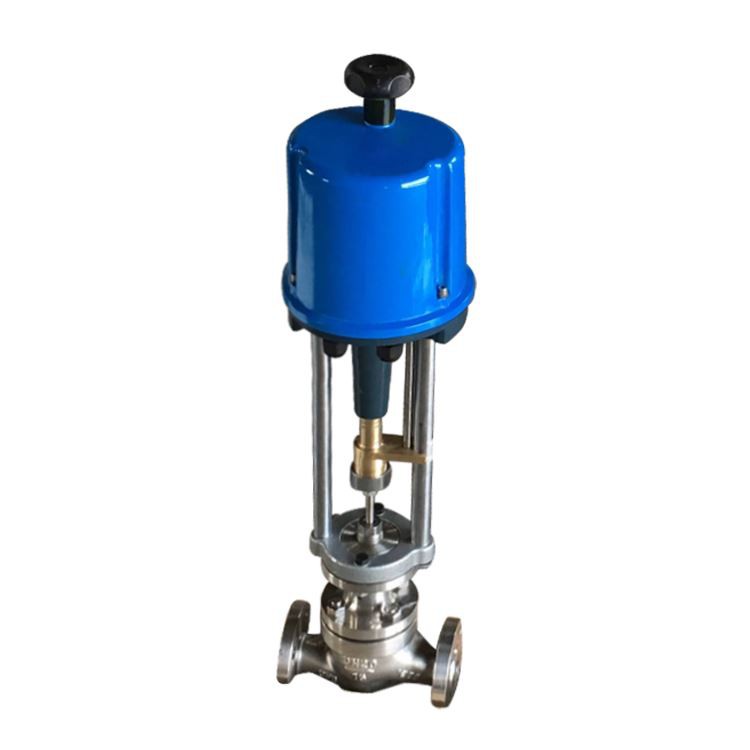
Control valves with high adjustment accuracy are generally straight-stroke type, and the valve body structure is mostly inverted S type, which has a dead angle of circulation and is prone to jamming. Especially in the early stage of newly installed pipelines or overhauled and put into operation, because there are a lot of welding slag, rust or other debris in the pipeline at this time, it is easy to cause medium blockage at the choke and guide parts. In addition, during the maintenance of the control valve, if the packing is too tight, the friction between the valve stem and the packing will be increased, resulting in the phenomenon that the small signal cannot act, and the large signal acts too much.
The auxiliary line or regulating valve can be opened and closed quickly, and the sundries can be discharged through the medium pressure. Or clamp the valve stem with a pipe wrench, and under the applied signal pressure, rotate the valve stem and valve core forward and backward to flash past the card. It is also possible to increase the pressure of the air source and move up and down repeatedly to reach the place where the blockage is loosened. If the above methods are invalid, it can only be dismantled.