

What is a electric actuator?
What are the pros and cons of electric actuators?
What are the features of electric actuators?
What are the application fields of electric actuators?
What is a electric actuator?
Introduction to electric actuators
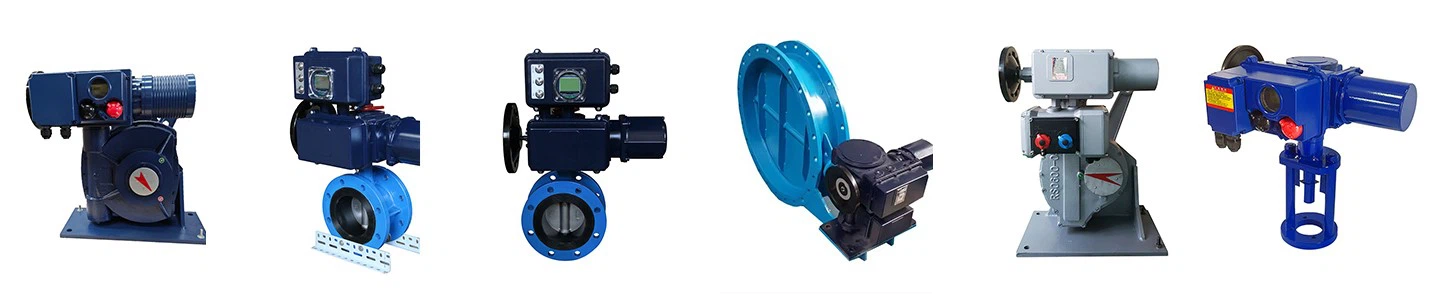
Electric actuators (electric actuators) are also called electric valve actuators or electric heads. They are called in different industries. In the industrial pipeline valve industry, they are called electric valve actuators, and in the instrument industry, they are called electric actuators (electric actuators).
Valves are very important equipment that are often used in industrial pipeline control. Electric valves are more commonly used than pneumatic, hydraulic and other drive devices because of their easy access to power sources and generally no maintenance. In industrial occasions, electric valves require higher reliability and safety. The safety and reliability of electric valves usually depend on electric actuators (electric actuators). Therefore, the performance, control accuracy, function, and intelligent program of electric actuators are comprehensive manifestations of the technical level of electric valves. Therefore, in addition to some basic factors that must be considered when selecting electric actuators (electric actuators), reasonable technical requirements must be put forward to maximize the value of electric valves.
There are many types of electric actuators (electric actuators). Electric actuators (electric actuators) of different types and functions can be called electric valves when matched with valves. However, in the process of design and selection, only the parameters of the valves are paid attention to, while the relevant requirements of the electric actuators are ignored or not clearly defined. This not only makes the electric valves unable to play the corresponding performance, but also brings unnecessary troubles during installation, commissioning and use, and even causes serious consequences to production.
What are the pros and cons of electric actuators?
Pros of Electric Actuators
Electric actuators have the advantages of convenient energy acquisition, fast signal transmission speed, long transmission distance, convenient centralized control, high sensitivity, high electric adjustment accuracy, convenient operation, and simple installation and wiring. The disadvantage is that its structure is complex, the thrust is small, and the average failure rate is higher than that of pneumatic actuators. It is suitable for places where explosion-proof requirements are not high and there is a lack of air source.
Cons of Electric Actuators
Its structure is relatively complex, and there are many failures. Moreover, due to its complexity, the technical requirements for on-site maintenance personnel are relatively high. The motor generates heat when it is running. If it is adjusted too frequently, it is easy to cause the motor to overheat. It has both thermal protection and will increase the wear of the reducer. In addition, it runs slowly, and it takes a long time to output signals from the regulator, move in the appropriate position, and make the regulating valve respond. This is the role of pneumatic and hydraulic actuators.
What are the features of electric actuators?
The electric actuator can be used with transmitters. It can also automatically operate damper plates, butterfly valves, ball valves, etc. to complete automatic adjustment tasks, or it can be used in conjunction with electric operating mechanisms to achieve remote manual control. The instrument can be widely used in the adjustment systems of industrial sectors such as power plants, steel plants, chemical industry, and light industry. The instrument has three control forms: continuous adjustment, manual remote control, and local manual operation. This instrument is suitable for non-corrosive gases, ambient temperatures of -25 ~ 70, and relative humidity of 95%.
1. The electric actuator position transmitter uses a high-reliability sensor with a resolution of 1/250. The output current type II is 0-10mA DC, and type III is 4-20mADC.
2. The load capacity of the output signal of the electric actuator position transmitter is strong, and the load capacity is ≤750Ω
3. Users can freely choose a travel limit mechanism, and it is easy to assemble and debug, with accurate positioning and good repeatability.
4. The AC servo motor has the characteristics of a valve motor, with a large starting torque, and can withstand frequent starts and short-term stalls. And it is equipped with a brake.
5. The gearbox uses a small amount of planetary gear transmission, which has the advantages of large speed ratio, small size, light weight and high efficiency.
6. It is combined with an intelligent analog position transmitter and an intelligent switch position transmitter to form an intelligent electric actuator
7. The position transmitter adopts integrated circuit technology, has low power consumption, low temperature rise, and constant current output characteristics. The output signal can be 4-20mA (DC) or 0-10 mA (DC). The wiring socket meets the IP65 standard.
Electric actuators have very good stability in use and can play a good functional role in various environments. The main advantage is that they can integrate very high stability and safety. Users can design according to constant reasoning, which can ensure better use of thrust and avoid various unexpected situations.

What are the application fields of electric actuators?
Electric actuators are a combination of actuators and control valves in automatic control systems. Its function in automatic control systems is to receive signals from regulators or computers (DCS, PLC, etc.) and adjust the flow of process media according to the position and characteristics of the process media in the process pipeline, so that the controlled automation instrument remains within the range required by the production process.
Electric actuators are also an indispensable and important component of automatic control systems. Its function is to receive control signals sent by the controller, change the size of the controlled medium, and thus maintain the controlled variable within the required value or a certain range.
Even when using electric instruments or computer control, pneumatic actuators can still be used as long as the electrical signal is converted into a standard air pressure signal of 20-100kPa through an electric-to-pneumatic converter or an electric-to-pneumatic valve positioner. Electric actuators have convenient energy access and rapid signal transmission, but they have complex structures and poor explosion-proof performance.

Electric actuators are mainly used in the following three fields:
1. Power plants
Typical applications include:
(1) Application in thermal power industry
(2) Application of valve actuators in other power industries
2. Process control
3. Industrial automation
(1) Application in sulfur mine production
(2) Application of potassium carbonate pipeline valve actuators
(3) Application of water treatment valve actuators


